Politics
Buenos Aires Legislature Advances Major Reform Package Affecting Housing, Transit, Healthcare
A sweeping set of bills moving through the Legislatura porteña this month touches housing, transit subsidies and public health funding, here is the timeline for when changes hit daily life.
How we reported this
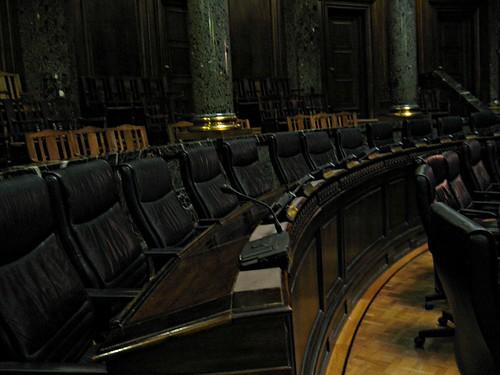
The Buenos Aires City Legislature is working through a dense calendar of bills this July, with committee votes on housing regulation, public transport co-participation funding and primary-care clinic budgets all scheduled before the winter recess closes on July 31. The package does not carry a single unified name, but together the measures represent the most consequential local legislative session since the 2023 fiscal co-participation dispute between the City and the national government. Residents in Comunas 1 through 15 will feel the downstream effects at different points over the next six to eighteen months, depending on which bill clears which chamber in time.
The backdrop matters. Argentina's national government has been pushing provinces and autonomous cities to rationalise spending under the broader fiscal consolidation framework that took shape after the 2024 budget agreement with the IMF. Buenos Aires City, which operates as an autonomous jurisdiction under the 1996 city constitution, must balance its own presupuesto while managing service obligations for roughly 3.2 million residents, according to the Ciudad de Buenos Aires statistical office (INDEC-GCBA joint estimates for 2025). Legislators say the current bills respond directly to that fiscal pressure, as well as to neighbourhood-level complaints that have mounted since the partial rollback of Metrobus routes in late 2025.
Housing and Transit: The Bills Closest to the Finish Line
The rental market reform bill, currently in the Comisión de Vivienda, proposes to amend the city's application of the national rental law framework by capping annual adjustment cycles at the official UVA index rather than allowing private contract clauses to set a higher rate. Policy analysts following the bill say that if it clears a full floor vote before recess, landlords and tenants renewing contracts from September onward would operate under the new cap. That is the first concrete date residents should mark. For tenants in Palermo, Villa Crespo and Caballito, where median rental prices rose an estimated 180 percent in nominal peso terms between January 2024 and March 2026 according to Zonaprop market data, the cap would limit the next adjustment to the published UVA figure, which was tracking at roughly 38 percent annualised as of June 2026.
The transit co-participation bill is more complicated. It would redirect a portion of the city's share of national transport subsidies toward the Metrobus network and Line H of the Subte, both of which have faced reduced frequency since early 2026. The legislation states that the reallocation would take effect in the Q4 budget modification, meaning residents would not see any service-frequency changes until, at the earliest, October 2026. Local advocates in Villa Lugano and Liniers, two of the highest-ridership corridors, note that the October window is optimistic and that implementation often lags the budget cycle by one additional quarter.
Public Health Clinics and the Longer Timeline
The third major measure is a supplementary appropriation for the city's 44 Centros de Salud y Acción Comunitaria (CeSAC). The bill proposes an additional 12.4 billion pesos in operating funds for the second half of 2026, according to the bill's own fiscal note tabled in committee on June 30. The government says the funding will allow the CeSAC network to extend weekday hours from 6pm to 8pm at 18 high-demand centres, primarily in the south of the city, and to hire 120 additional staff across nursing and administrative roles. The hiring process, however, runs through the city civil service system, and public-sector recruitment rounds in Buenos Aires typically require four to six months from appropriation to first payroll. Residents near CeSAC facilities in Parque Patricios and Nueva Pompeya should expect expanded hours no sooner than the first quarter of 2027.
What happens next is a floor-vote schedule that the Legislature's presiding body is expected to publish this week. The housing bill is the most advanced and could reach a full vote as early as July 15. The transit bill faces a second committee reading and is more likely to land in the final week of the session. The CeSAC appropriation is widely expected to pass but has been flagged for a fiscal-impact amendment that could reduce the headline figure. Residents who want to track each bill can monitor the Legislatura de la Ciudad portal, where committee minutes and vote tallies are posted in real time. The recess begins August 1, and any bill not passed by then rolls into the ordinary session scheduled to resume in March 2027.