news
Buenos Aires Tackles Years of Neglected Visual Archives Crisis
A surge in duplicate and degraded digital images across municipal databases has exposed years of underfunded record-keeping and forced agencies to confront a backlog that stretches back to the analogue era.
How we reported this
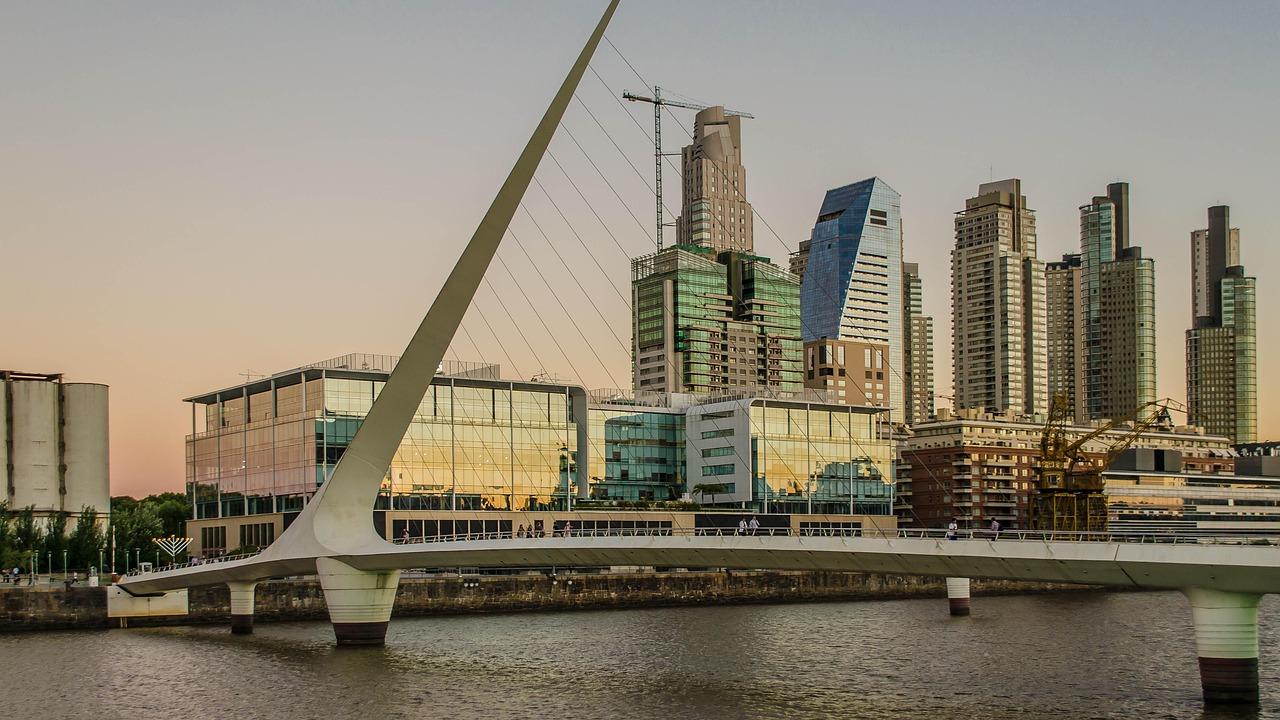
Buenos Aires's municipal image archives contain hundreds of thousands of photographs, maps and scanned documents, and a growing share of them are broken. Duplicate files, corrupted scans and mislabelled heritage photographs have accumulated across at least three separate city government databases, a problem that archivists at the Archivo General de la Ciudad say has been compounding since the early digitisation push of 2009, when agencies raced to convert paper records without agreeing on a unified file standard.
The issue matters now because the Milei administration's sweeping public-sector austerity programme has forced a reckoning. Budget cuts to the Secretaría de Cultura de la Nación eliminated several digitisation maintenance contracts in late 2024, leaving inherited backlogs without the specialist staff to resolve them. At the same time, the city's own heritage offices are under pressure to make collections publicly accessible online, a transparency commitment attached to a 2023 modernisation plan, while lacking the tools to clean what they already have.
A Problem Decades in the Making
The roots of the duplicate-image crisis run through two distinct eras of Buenos Aires record-keeping. The first is the analogue-to-digital transition of the 1990s and early 2000s, when institutions including the Biblioteca Nacional Mariano Moreno on Agüero street and the Museo de Arte Popular José Hernández in Palermo each developed their own scanning workflows, producing overlapping collections with no shared metadata schema. The second is the smartphone era, roughly 2012 onwards, when community contributions and social media grabs flooded city-linked repositories with unvetted duplicates.
The Palermo Soho neighbourhood offers a concrete illustration of the damage. Urban planners working on the 2025 rezoning study of the Serrano and Thames corridor requested historical aerial photographs from the city's infrastructure database and received 847 image files, of which 312 were exact duplicates and a further 90 were low-resolution copies of the same originals, according to a planning department internal review cited in local specialist press. The usable pool was less than half what planners had requested.
A similar bottleneck surfaced at the Centro Cultural Kirchner on Sarmiento 151, where curators assembling a retrospective exhibition on Buenos Aires street photography in 2025 reported that the city's official photographic registry returned multiple conflicting versions of the same images, some with incorrect dates and others with authorship metadata stripped entirely.
The Path to a Fix, and Why It Won't Be Quick
Resolving the problem requires three things city agencies are currently short on: money, agreed technical standards and specialist human capital. The IMF programme conditions attached to Argentina's current credit arrangement have placed a ceiling on discretionary public spending, making large-scale procurement of image-management software difficult to justify inside existing budget lines. A proposal to use open-source deduplication tools, piloted by a team at the Universidad de Buenos Aires's Facultad de Ciencias Exactas y Naturales in late 2025, showed promising results in a test batch of 20,000 heritage photographs but has not been formally adopted city-wide.
The peso's partial stabilisation has at least made software licensing costs more predictable than they were during the exchange-rate volatility of 2023, when a single annual licence for an enterprise document-management platform briefly cost the equivalent of three times its dollar price at the official rate. That particular distortion has eased, but agencies are still working through multi-year procurement freezes imposed during the adjustment period.
Practically, archivists and researchers working with Buenos Aires municipal collections should expect the status quo to persist through at least the first half of 2027, when a city modernisation review is scheduled to reassess digitisation priorities. In the meantime, the Archivo General de la Ciudad has published a workaround guide for external researchers on its website, advising users to cross-reference any image retrieved from the main database against the parallel holdings at the Biblioteca del Congreso de la Nación on Alsina street, which maintains its own independently curated photographic collection and has fewer reported duplication issues. The fix, in other words, is currently a workaround, and everyone in the system knows it.